White Poverty in South Africa
White Poverty in South Africa by Jayne Haywood
Upon arriving back in South Africa in 2014 it is clear to see the shift in the living standards of the White South African from when I first arrived in 2005.
The end of apartheid in 1994 and the introduction of Black Economic Empowerment (a government policy designed to improve discrimination in the work place) have brought about a change in the living standards of the working class, white South African.
The working class, white South African, a faction of South African society, who may have been better off during Apartheid, now finds itself in high-level unemployment, with declining living standards in health care and education.
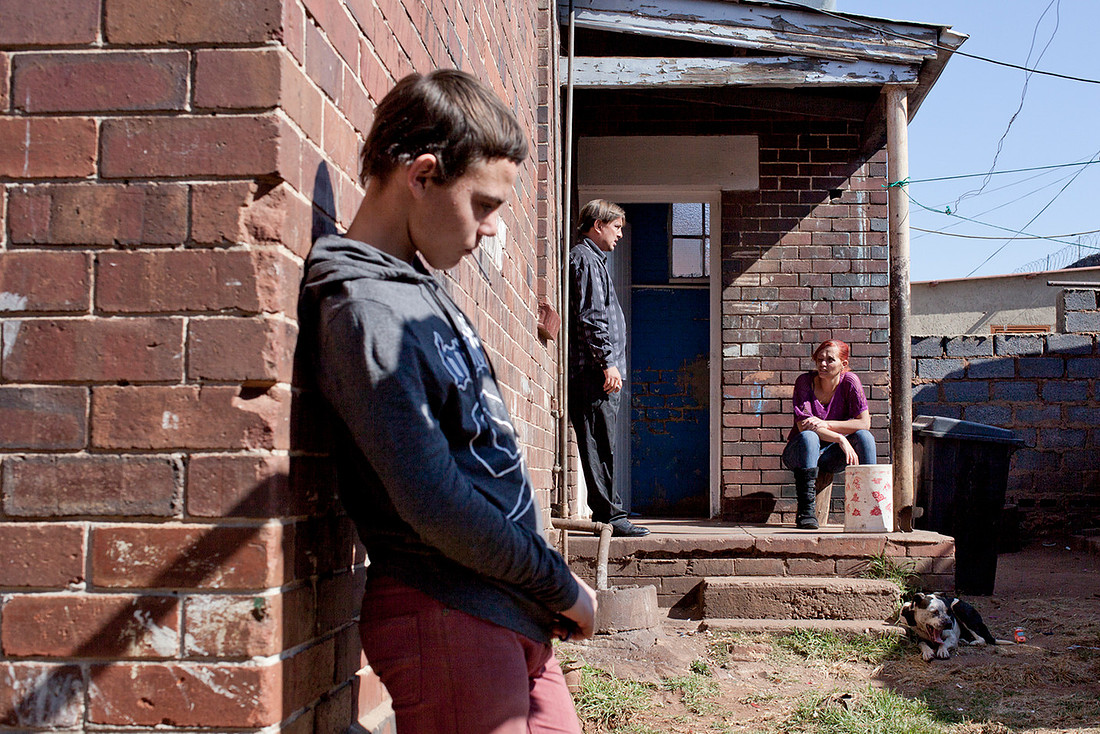

Changes in social attitudes and socio economics have resulted in an emerging hierarchy within the working class, defined by the living standards of this group. These standards range from brick housing in the suburbs, to shack living in squatter camps, and at the bottom of the scale you find street dwellers.
The dynamics between cultures are changing in the way that the stereotypical white working class South African life style looks today. Now grouped by need rather than creed, colour or language. We now see an integrated society, where black, white, coloured and mixed raced families live together gaining daily support from one another.
There is little by way of state benefit, the elderly are given a monthly pension of R1600, the equivalent of approximately £80 and in many cases this money goes to feeding an entire family and sometimes their extended family.Families with children can get up to R300 a month per child and adults get nothing. Soup kitchens and charities often help to make up the short fall.
Those fortunate enough to have a roof over their head tend to rent out areas of their garden, filling the spaces with make shift shacks, old vans or anything that could be described as shelter.
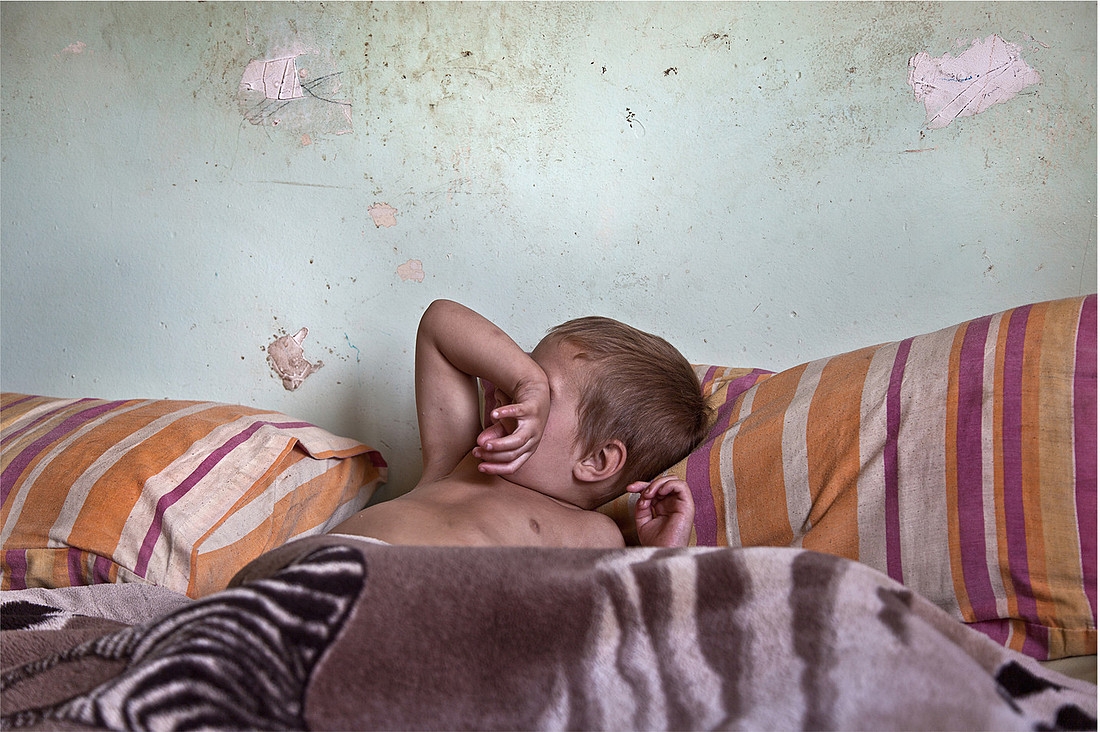
Education is subsidised, primary children are schooled for free and secondary schools charge around R350 – R500 per student. Sometimes meals and learning books are provided, paper and stationary is not. Health care is free in substandard hospitals, often with lengthy waiting lists for operations and procedures, a sick person can sometimes return daily and stand in a queue for up to 2 – 3 days before being seen by a doctor.
The images in this documentary were taken in an area called ‘Jan Hofmeyer’, a small community on the outskirts of Johannesburg, where families are living below the poverty line in previously owned local authority houses, that were given to the occupants during the apartheid government. The houses are in a state of dilapidation, with no money for basic renovations.
During my time there, I spent a lot of time getting to know the residents and listening to their daily challenges involving unemployment, drug abuse, poor health and education. Almost everybody I spoke to could see no way out of their predicament and many had resorted to crime, alcohol and drug addiction.

